
Pipe work (Pipe Vibration)
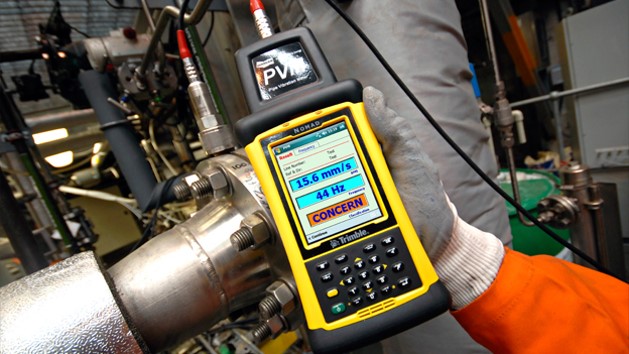
Piping systems are subject to vibration-induced failure. To mitigate this risk to integrity, an evaluation of the vibration of the pipes is carried out during the design stage and high risk areas are analyzed during the operation stage. The vibration analysis of the pipes is based on the guidelines of the Energy Institute (EI) and other relevant methodologies.
The guidelines of the Energy Institute are the recommended approach to identify and resolve the vibration risks of the pipes. Using pipe stress analysis, dynamic vibration analysis, transient flow, and other related design studies. Below is a summary of the Integrity Assessment of the Pipes, which includes an evaluation of the Energy Institute, static stress analysis and on-site review of the vibrations.
Application:
-
Small Bore Connections (SBC)
- Flow-induced turbulence (TIF)
- Vibration induced by the flow (VIF)
- Acoustically induced vibration (VIA)
- Water hammer
- Change in the amount of movement
- Cavitation / Instant vaporization (Flashing)
- Stress Analysis of the Pipes
- External loads of the pipes
- Fastening and design of the structure
- Analysis of the loads supported by the nozzles of machinery and equipment
- Control of overpressure in compressors
- Transverse acoustic analysis of the casing (ATC)
- Pulse Analysis
- Dynamic stress analysis of the pipes
- Transient pulsations
- Vibration of the pipes (stable condition)
- Analysis of the natural mechanical frequency (FNM)
- Vibration of the pipes (transient)
- Deformation of the pipes
- Vibration of small diameter connection